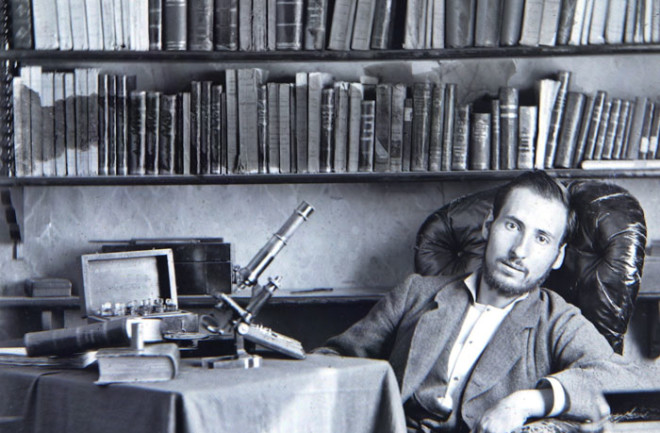
Cajal throws things into a different gear in chapter 2 of the Textura, giving us a “Review of Research Methods and Resulting Discoveries.” If you’re not a neuroscientist, this probably sounds about as exciting as chewing on sawdust, especially after some very high-minded meditations in chapter one about the origins of nervous systems, “psychic cells,” and how much of reality we can truly know.
But method is absolutely fundamental to Cajal’s project, and there can be no real understanding of his project without knowing what it is he and the other neuroanatomist heroes of his day actually did — how they toiled with slicers, tissue stains, and microscopes as they probed the brain’s nests and jungles. What I really love about all this is how much Cajal approaches his work as an artist and an artisan. There was a certain romance to the glimpse in his time, a respect for seeing as a sacred and romantic act that we’ve since lost. When I was in grad school, I “acquired images” from brain tissue, triggering a shutter from a computer, which was synched to a $50,000 CCD camera (chump change, by today’s standards). The end result of this was a file. ‘Acquiring’ an image doesn’t seem like a fitting description of what Cajal did. Instead, he captured images of neurons, more in the manner of a photographer. They remained images through and through, in his mind, sketched on paper, never being reduced to numbers, or mapped to some other format. I don’t want to get too gooey and hagiographic over this and imply that what Cajal did in his time was sacred and vibrant and true, whereas what we’re doing in ours is cold and mechanized. There’s plenty that Cajal missed the boat on, and there are entire worlds he had no access to with his limited methods. But it’s impossible to not be enchanted by this very special era of inquiry, where artistry and a certain kind of faith were what won the day.
Stay tuned! More soon.
 The Excitable Membrane
Leave a comment