Thoughts on current neuro research, and classics of the field. Much of what you find here in the near future will be a detailed reading of James’ Principles of Psychology and Cajal’s Texture of the Nervous system. See the first blog post The Project if you’re new here and want some more context.
-
Summary/cheatsheet for chapters 1 & 2
(A recap of some big picture ideas from Chapters 1 and 2. I’m summarizing pretty densely here, and for my own later reference, but if you’ve read the posts up to here this should all be sensible). I. James’ project is strongly rooted in ideas about evolution and natural history. He’s very interested in the… Read more
-
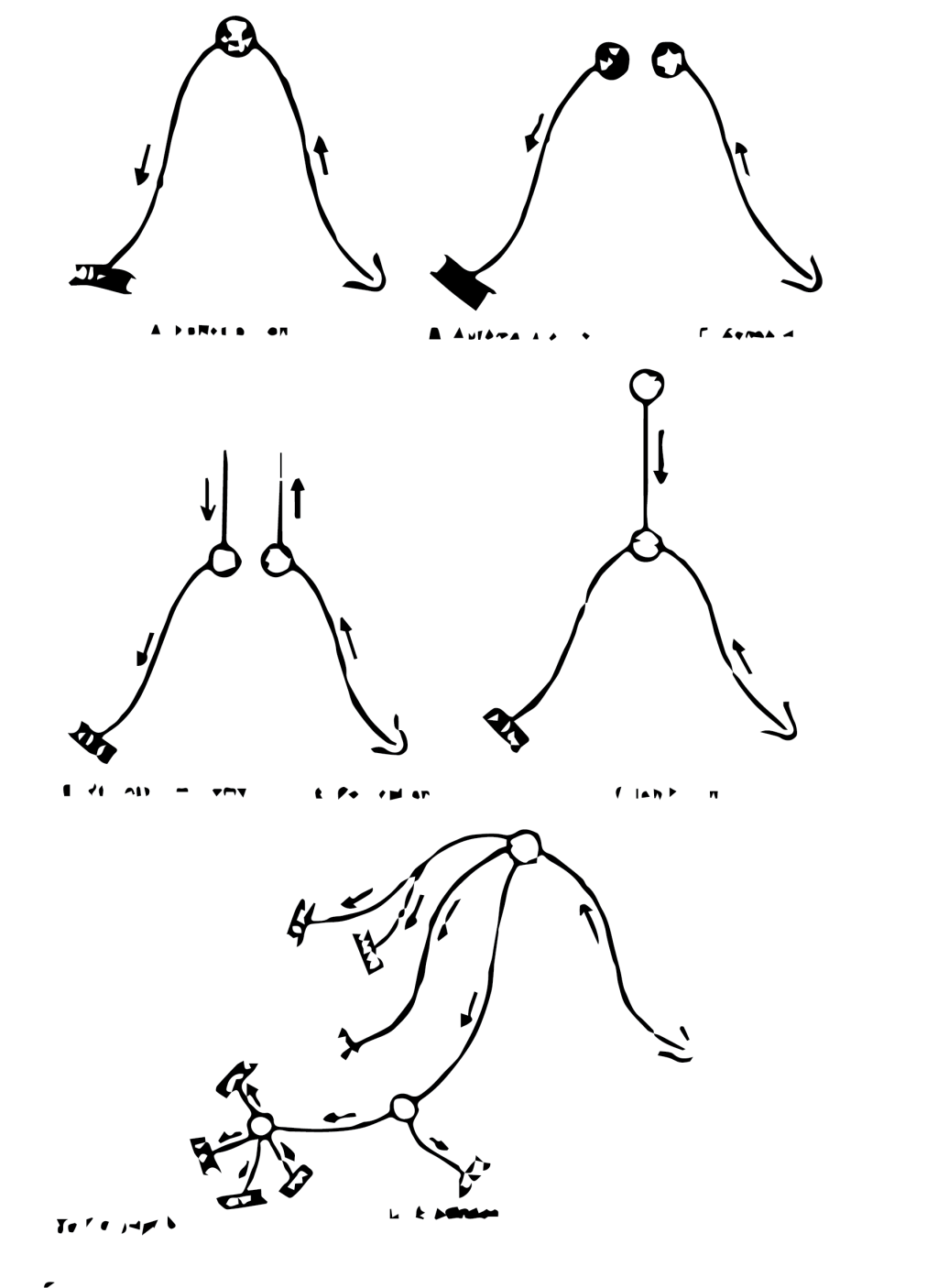
Final thoughts on the Meynert scheme. We’re (probably) not just bundles of reflexes.
James wraps up his chapter on the brain by offering his final “correction” of the Meynert scheme, and these corrections are important for his later considerations on the role of the will, instincts, and emotions in behavior. I don’t know what the intellectual climate was at the time, but it seems like Meynert’s ideas (which… Read more
-

The restitution of function. Do new things happen in the brain, or are old things just repurposed?
“The restitution of (brain) function” is James’ phrase, and it’s a somewhat cumbersome one. Today we’d just refer to the underlying idea as the brain’s “plasticity.” James is a phenomenal writer, so I’m inclined to believe that if he could have gotten his intent across with a two dollar word instead of a ten dollar… Read more
-
Ejective consciousness
“It may be called the theory of polyzoism or multiple monadism; and it conceives the matter thus: Every brain-cell has its own individual consciousness, which no other cell knows anything about, all individual consciousnesses being ‘ejective’ to each other. There is, however, among the cells one central or pontifical one to which our consciousness is attached.” William James,… Read more
-

The localization question, part II
After summarizing the evidence for localized motor function in the brain (the cortex in particular), James does the same for sensory function. Again, I’m impressed by how much this view from 1890 could be ported over to an Intro Neuro class in 2024. That’s not to say nothing here is wrong or dated. Just that… Read more
-

The localization question, part I
Having dispatched with the phrenologists, James next considers the question of localization of brain function — one of the most enduring and important in neuroscience. This section of the Principles is a tour of Neurology in the nineteenth century, and reading it, I’m impressed by how much of it holds up. It can be easy… Read more

